A concert day at the Great New York State Fair can include much more than the headliner, but it needs a realistic route. Chevy Court and Suburban Park are different destinations, and first-come seating makes a last-minute dash less appealing than it sounds. Choose one performance as the anchor, then fit food, exhibits, and another music stop around it.
Sources were reviewed October 2, 2026. The fair has announced August 25-September 6, 2027, and its Chevy Court page publishes the planned 2027 music format. Individual artist announcements and event details should still be checked before booking a trip. For the wider visit, use our New York fair visitor guide.
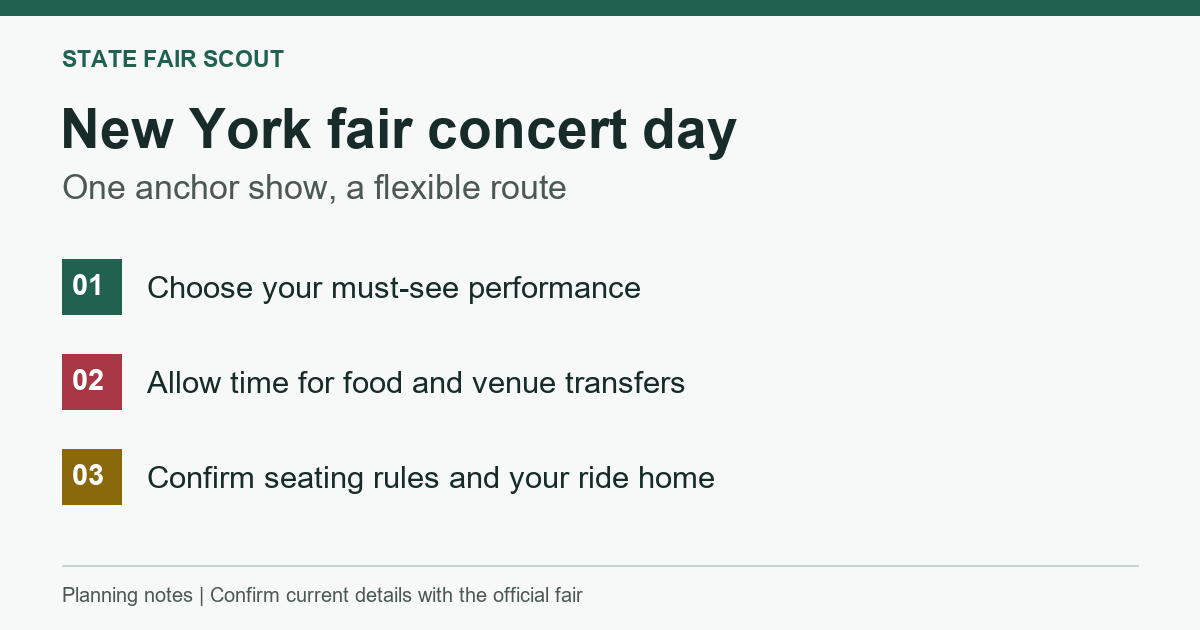
Choose your concert and map the practical details
Understand the two main music venues
The official Chevy Court page places that venue near Gate 1 and Suburban Park on the western end of the grounds beyond the midway. Its published 2027 format is afternoon and early-evening Chevy Court concerts, plus an evening Suburban Park concert. Performances in the Chevrolet Music Series are included with fair admission, and seating is first-come.
Think of the two stages as separate destinations, not adjacent rooms. Check the official map and identify the route between them before planning back-to-back performances. The time available between advertised starts must also cover leaving a crowd, walking, and finding a new viewing position.
Read the individual event time, not just the general pattern
The current Chevy Court overview gives a general pattern of 1 p.m. and 6 p.m. shows, but the event list also includes exceptions, including earlier Labor Day starts and additional late listings. Read your specific date and event. A general series description is not a substitute for the performance’s own listing.
Save the official listing with its date visible. Artist names, special performances, and operating arrangements can change as announcements are added. If a listing is still a placeholder, do not assume a particular artist will occupy it based on the previous year’s lineup.
Make one performance the must-see
Ask your group which show would make the trip worthwhile even if you skipped everything else. That becomes the anchor. An afternoon Chevy Court performance can work well for a shorter visit; an evening Suburban Park priority suggests leaving more of your energy and walking capacity for later.
Choose at most one additional concert as an option rather than a promise. This gives you room for a slow meal, an interesting exhibit, or an unexpectedly long entry process. If two favorite acts create a tight transfer, decide in advance which one takes priority.
Set the transport plan before filling the daytime schedule
Review the official parking and transportation page. It currently contains 2026-specific parking and transit information despite the site’s 2027 header. Use it to understand the options, but confirm the new season’s locations, fares, and last departures when they are published.
If using a shuttle, record the last return trip for your particular day and route. If driving, save the lot name and a photo of your parking reference. Do not schedule the end of the night around a departure time copied from a different year or a different day, especially Labor Day.
Build a flexible concert-day itinerary
Arrive with a buffer, then put exhibits on the route
Allow separate time for entry and for reaching your first destination. After you enter, do a quick orientation: locate the stage, a restroom, and a meeting point. You can then choose nearby exhibits rather than crossing the entire grounds for every attraction on your list.
Use the following example as a sequence, not an official timetable. Actual performance times and your desired seating should determine the intervals:
- Entry and orientation: Reach the grounds, verify the day’s announcements, and locate the anchor stage.
- First activity block: Visit a nearby exhibit or optional afternoon show without committing to a distant detour.
- Main meal and break: Eat and use the restroom before the seating period for the concert that matters most.
- Anchor performance: Follow venue directions and choose a position that suits the group.
- Optional second stop: Continue only if the route, available time, and everyone’s energy make sense.
- Departure: Leave enough margin to reach the correct lot or return-service pickup.
For a single evening show, you do not need a full-day itinerary. A later arrival with one meal and one exhibit can be more enjoyable than starting early and spending hours tired before the performance.
Put food and rest before the seating decision
Choose a meal window that ends before you intend to settle at the stage. Carrying several plates through a crowd while searching for friends makes both tasks harder. Allow a seated break for anyone who has already spent much of the day walking.
Give the group a clear regrouping time and location if people want different food. “Meet by the stage” can be ambiguous once a crowd arrives. Pick a specific landmark away from a busy aisle, and agree on a backup if mobile messages are delayed.
Follow the seat-saving and accessibility rules
The official concert policy does not allow routine seat saving. It makes a limited temporary exception for personal necessities, allowing a person to hold up to two additional seats; unattended belongings used to claim places may be removed. Keep aisles clear and do not stand on benches.
The policy also describes designated seating for people with disabilities as first-come, with different companion limits depending on the section. Read those details for your circumstances and consult staff. Do not assume a reserved place or unlimited companions. Plan a nearby regrouping option if the group cannot all use the same area.
Arriving together is simpler than trying to claim an entire row. For a group that needs frequent breaks, a position with a comfortable route out may be preferable to the most crowded central view. Read our accessibility planning guide for questions to organize before contacting the fair.
Protect the end of the day
Check the forecast and fair announcements again before the evening performance. Make sure phones have enough charge for tickets, messages, and transport arrangements. The concert policy prohibits umbrellas during performances, so review permitted rain gear before relying on an umbrella at your seat.
Budget for admission, parking or transit, meals, and any separate activities even though the published music series is included. Our fair concert guide helps distinguish included stages from ticketed events at other fairs. Leave optional purchases until you understand the day’s essentials.
Concert-day questions
Can I see Chevy Court and Suburban Park on one visit?
That can be a workable plan, but check the specific events and allow time to leave one venue and reach the other. Do not assume that every pair of shows allows a comfortable transfer or a preferred seat.
Is the 2027 lineup fully confirmed?
The official venue page publishes dates and the planned format. Verify individual artist announcements rather than treating unfilled schedule slots or past artists as a completed lineup.
Can a friend hold seats while the rest of us tour the fair?
Routine seat saving is not allowed under the published policy. Its narrow personal-necessity exception is not permission to reserve a large group while others spend the day elsewhere.
The simplest plan: one priority show, a meal before settling in, a realistic route between venues, and a confirmed way home. Optional attractions can fill the gaps without putting the concert you came for at risk.